Featured Post

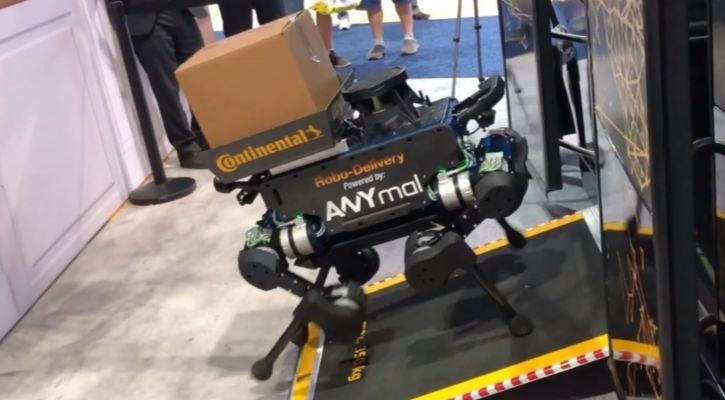
CES 2019: The Future Looks Like These Robot Dogs Delivering Your Shopping To Your Doorstep

At CES, you can usually expect to see some cool stuff and some weird stuff. It's not very often that you see both in the same display, ...

NASA’s InSight mission has touched down on Mars to study the red planet’s deep secrets

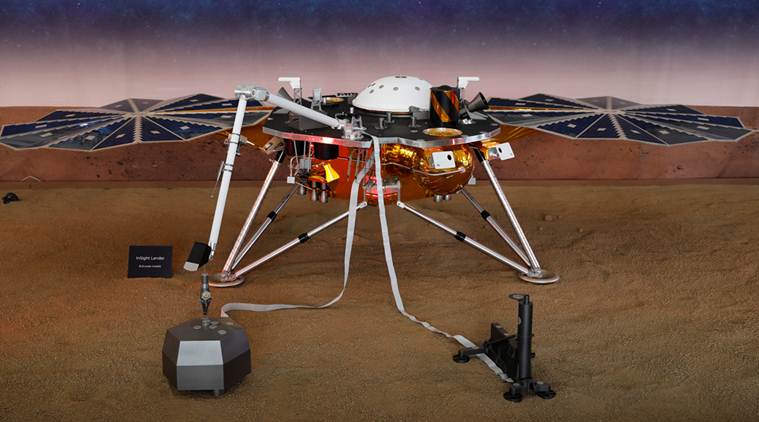
The InSight lander, NASA’s latest foray to the red planet, has landed.
Cheers erupted Monday at the Jet Propulsion Laboratory in Pasadena, California, which operates the spacecraft, when InSight sent back acknowledgment of its safe arrival on Mars. That was the end of a journey of more than six months and 300 million miles.
NASA’s InSight mission has touched down on Mars to study the red planet’s deep secrets

NASA’s InSight Mission Has Touched Down on Mars to Study the Red Planet’s Deep Secrets

As InSight descended and each milestone of the landing process was called out, “the hairs on the back of my neck would start rising a little bit higher, a little bit higher,” Tom Hoffman, the project manager for the mission, said at a news conference after the landing. “And then when we finally got the confirmation of touchdown, it was completely amazing. The whole room went crazy. My inner 4-year-old came out.”
In the months ahead, InSight will begin its study of the Martian underworld, listening for tremors — marsquakes — and collect data that will be pieced together in a map of the interior of the red planet and would help scientists understand how Mars and other rocky planets formed.
Those lessons could also shed light on Earth’s origins.
“We can basically use Mars as a time machine to go look back at what the Earth must have looked like a few tens of millions of years after it formed,” said Bruce Banerdt, the principal investigator of the mission. 
InSight set down at Elysium Planitia, near the Equator in the northern hemisphere. Mission scientists have described the region as resembling a parking lot or “Kansas without the corn.” Within minutes, the first photograph from InSight appeared on the screen, eliciting another round of cheers.


The image was partially obscured by dirt kicked up onto a protective but clear lens cover, but it was evident that the landscape was indeed flat. One rock could be seen in the foreground. 
“I’m very very happy that it looks like we have an incredibly safe and boring-looking landing location,” Hoffman said.
Because the mission is not interested in rocky terrain or pretty sunsets, planners wanted a flat place with sandy soil. “There’s one rock, so I’m going to have to talk to them a little bit,” Hoffman joked.
The main scientific part of the mission will not begin for a few months. Once the mission’s managers have confirmed the health of the spacecraft, including its robotic arm, the arm will lift the spacecraft’s primary instruments off the main deck of the lander and place them on the Martian ground.
Elizabeth Barrett, a science system engineer, likened the process to a claw game where one tries to pull out a prize without it falling. “But you’re doing it with a really, really valuable prize,” she said. “And you’re doing it blindfolded where you can only take occasional pictures. And then you’re doing it via remote control on another planet.”
That requires some additional care. “You need to make sure you actually have the grapple on the payload before you lift it up and it’s actually on the ground before you let it go,” Barrett said.
InSight’s primary mission on the surface is to last nearly two years.
One simple thing Banerdt hopes to learn: how thick is the crust of Mars?

He recalled a project he worked on as an intern in the 1970s where the thickness of Mars’ crust needed to be known. “We just had to fake it, because we had no idea,” he said.
InSight should finally provide the answer. “That’s one measurement I would like to go back to the old paper, plug it in to see how close I was,” Banerdt said.
Other questions the mission aims to answer: How often does the ground shake with marsquakes? How big is Mars’ molten core? How much heat is flowing up from the decay of radioactive elements at the core?
To study these questions, InSight will use two main instruments: a dome-shape package containing seismometers and a heat probe that is to burrow about 16 feet down. NASA has spent $814 million on InSight. In addition, France and Germany invested $180 million to build these main instruments.
The seismometers, which are designed to measure surface movements less than the width of a hydrogen atom, will produce what are essentially sonograms of the planet’s insides. In particular, scientists are looking to record at least 10 to 12 marsquakes over two years.
Temblors on Mars are not caused by plate tectonics, like on Earth. Instead, they are generated when the planet’s crust cracks because of its interior’s cooling and shrinking. The seismometers could also detect other seismic vibrations from meteors hitting Mars.
InSight’s landing wasn’t NASA’s only success Monday. The agency used the mission to test new technology.
Two identical spacecraft known as Mars Cube One, or MarCO for short, launched with InSight in May. MarCO A and B then separated from InSight’s cruise stage and have since been trailing behind it.
Hundreds of miniature satellites known as CubeSats have launched into orbit around Earth in recent years, but this is the first time that CubeSats have been sent on an interplanetary voyage.
The MarCO spacecraft relayed InSight’s telemetry to Earth flawlessly, enabling the immediate celebration. “This has been a fantastic day for spacecraft great and small,” said Andrew Klesh, the chief engineer for the CubeSats.
He showed a picture of Mars taken by one of the MarCO satellites shortly after the InSight landing as it sped away from Mars.
“This image is really our farewell to InSight, our wish for good luck and a farewell for Mars itself as we continue on,” he said.
InSight joins a busy cast of Martian robotic explorers.
In orbit, NASA also has the Mars Reconnaissance Orbiter, Mars Odyssey and Maven. The European Space Agency has Mars Express and the ExoMars Trace Gas Orbiter. The Indian Space Research Organization has the Mars Orbiter Mission, also known as Mangalyaan.
On the surface, NASA has the Curiosity and Opportunity rovers, although solar-powered Opportunity has been quiet since the summer when a global dust storm prevented it from generating enough power to operate.
And the year 2020 could get busier, when NASA is planning to launch another rover that will search for the building blocks of life.
China, India, Japan, the United Arab Emirates and a European-Russian collaboration are also all intending to launch missions to Mars then.

We Will Be Jobless: Watch This AI Code A Website, While Looking At A Guy Drawing It With A Pen

Web design can be a real drag. Especially if you're not a professional, designing a website for your startup or your home crafts, is really troublesome, even with the right tools.

We Will Be Jobless: Watch This AI Code A Website, While Looking At A Guy Drawing It With A Pen

Luckily, there may be a way to make the entire process much easier using AI.


TeleportHQ is a platform of open-source tools for UI professionals, which is a fancy way of saying they provide web designers with the tools they need to build an app or website. They've just released a video demonstrating a new real-time code generation method using TensorFlow, the open source machine learning framework from Google Brain.

If you're having trouble wrapping your head around that, I don't blame you. It's pretty fascinating stuff. What's happening is that a camera pointed at the white board is capturing all of the demonstrator's drawings. He's drawing a wireframe design for a website, marking out banners and text boxes in the process.

The TensorFlow image recognition system here has been trained to parse what each of these pieces of a website are and it can, as he's drawing, write up the code to generate the website as it can see. In essence, what you're getting is a real-time translation from sketch to code, without you lifting a finger to the keyboard.


Of course, this is fairly niche stuff for most people, but you can bet others in the design community are losing it. After all, it could completely revolutionise how they do their jobs, allowing to work much faster and more efficiently than ever before.

This Foldable Electric Scooter With Bluetooth Speakers May Be Your Best At Beating Traffic Jams

A big perk of electric vehicles is the fact that they are not restricted to the traditional automobile form, shape or size. That means that the use case is not limited to electric cars, bikes, trucks or even planes.

This Foldable Electric Scooter With Bluetooth Speakers May Be Your Best At Beating Traffic Jams.


With the rise in electric-motors powering transportation utilities, new concepts are coming to fruition -- be it a Hyperloop or compact electric scooter.

A similar concept has taken shape in the form of UJET electric scooter, a smart and fully foldable scooter that is meant for everyday city travelling. Designed by Luxembourg-based UJET, the electric scooter sports 14-inch spokeless wheels in a magnesium fibre angular frame.


The two models of the scooter are powered by batteries with a range of 70 kms and 150 kms, having weights of 43 kg and 48 kg respectively. What’s more, the batteries can be detached from the scooter for carrying convenience and can also act as a separate battery bank.

As for the tech features of the scooter, the UJET electric scooter comes with a front-facing HD camera for recording videos. At the helm, it has a touchscreen display that shows the speed and other information. The embedded computer comprises of GPS, 3G connectivity, voice control and even music playback.

For connectivity, the scooter also comes with WiFi and Bluetooth options, through which it can also connect with a dedicated app. As for the app, features like locking and unlocking of the e-scooter as well as remote checking are enabled on it.

The current pricing of the UJET e-scooter starts upwards of Rs 70,000 for the base variant, while the one with the larger battery costs around Rs 80,000.

It is not sure as to if and when the e-scooter will be available in India but if it does, it will act as an ideal way of pushing the electric vehicle ecosystem, considering the ease of carrying (when not in use) and recharging it.

This Three-Wheeled Electric Vehicle Goes 129 Km/h & Is Called The 'Fun Utility Vehicle'

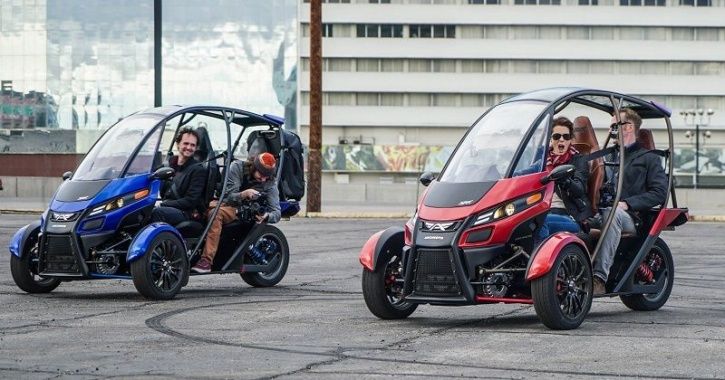
In case you thought electric vehicles only came in shapes of two-wheelers, four-wheelers or even trucks or buses, you might want to think again. This Oregon-based company has just finished testing the first production series of its three-wheeled electric vehicle and is calling it the Fun Utility Vehicle (FUV) - and for all the right reasons.

This Three-Wheeled Electric Vehicle Goes 129 Km/h & Is Called The 'Fun Utility Vehicle

Consider how much fun you can have on a golf cart that looks like a three-wheeler? Also, this is not a three-wheeler with two rear wheels, like our conventional auto-rickshaw. The FUV is a tadpole trike, meaning the two-wheel arrangement is on the front of the vehicle, while the back is powered by a single wheel. The semi-enclosure design of the FUV ensures rainy days don't play spoilsport.
Three-Wheeled Electric Vehicle, Fun Utility Vehicle
ARCIMOTO INC
As a reference to its capabilities, the FUV can speed up to 129 km/h with a 12 kWh or 20 kWh battery providing a 113 to 209 km range on a single charge respectively.
For now, Arcimoto Inc has completed the testing of the first production series of the trike, now moving to the production of the pilot-series vehicle. Priced at $11,900 (~Rs 88,000) (minus the add-ons like the side enclosures and more), 2900 plus units of the FUV have been pre-booked by customers with a $100 deposit.
To cater to this demand, Arcimoto now seems to be focused upon ramping up the production rate, announcing 25 more units in its pilot-series which will be manufactured semi-autonomously in Arcimoto’s own manufacturing plant.


Will This New Patent Allow You To Steer Your Self-Driving Car With Your Phone?

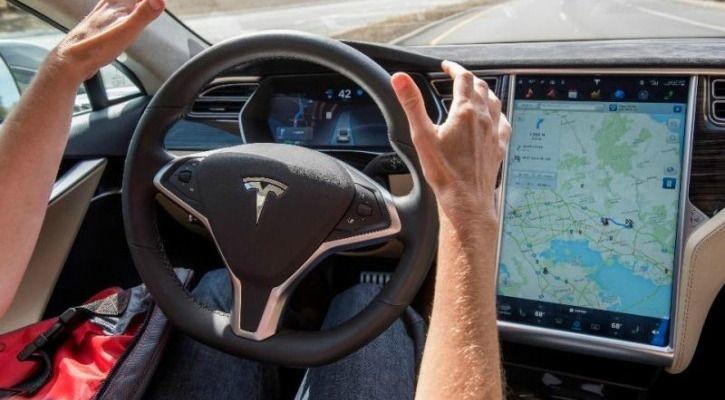
In the future, it seems the one thing a self-driving car won’t need is a steering wheel. Automotive giant Ford has filed a patent that will let you take over from your AI driver with that most ubiquitous device of our times – the smartphone. The company recently obtained a patent from the US Patent and Trademarks office for two alternate driving modes. Both involve using a touchscreen device to steer an otherwise autonomous vehicle.

Will This New Patent Allow You To Steer Your Self-Driving Car With Your Phone?

self-driving car
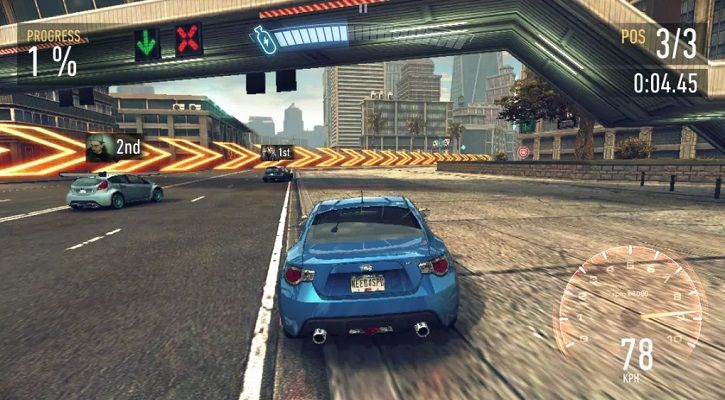
You could hold your smartphone like a steering wheel and tilt to navigate, much like you would in smartphone games like Need for Speed, or Real Racing. The accelerometer and gyroscope in your phone measures your motions and the action of a steering wheel. The second option is  to use your finger to turn a steering wheel displayed on the touchscreen. 
that sounds like you’ll have limited control, you’re right. You won’t necessarily be given full control of the vehicle; acceleration and braking would probably still be controlled by the car’s computer. It’s clearly a safety measure designed into the feature, to stop any untoward accidents. The idea is simply to let you steer the car when forcing a lane change on the highway perhaps, or maybe guiding the car through an area it hasn’t mapped or doesn’t recognise.
racing game
NEED FOR SPEED: NO LIMITS - COURTESY EA GAMEs
Of course, there’s no guarantee this will actually ever be a feature in any self-driving car. Patents merely let companies claim initial ideas, but it’s only later in the development stage that they figure out whether it’s really feasible to build. Indeed, this particular idea already has issues, like how to bridge a lag in the connection to keep your car as responsive to your steering as possible. Another major concern is how much easier this kind of system makes it for a hacker to hijack your autonomous car’s control.
We will have to come up with alternatives like this, as we’ve not yet discovered a way to make self-driving cars completely infallible. At some point or the other, you’ll probably be required to take over to navigate through a tricky situation. And when that happens, you need an incredibly safe and stable system you can rely on.

US Takes First Steps Towards Autonomous Cars, New Rules Say Drivers Need Not Be Human

While conversations around a ‘driver’ in India would simply imply a human behind the wheel, the recent amendments to the guidelines governing autonomous vehicles in the US enable a whole different take on this. As per the US Department of Transportation, the definitions of ‘driver’ and ‘operator’ will now also include the possibility of an automated system and not a human exclusively. 

US Takes First Steps Towards Autonomous Cars, New Rules Say Drivers Need Not Be Human


The move comes as an attempt to ensure road safety, given the increasing number of autonomous vehicles on the US roads. These vehicles are not only restricted to cars owned privately but also to trucks and other fleet vehicles and will especially be helpful as the automakers are soon expected to expand this umbrella to incorporate self-driving taxis, buses and what not.
A more significant impact of these guidelines expands to less noticeable vectors of moving towards an autonomous future. The DOT guidelines acknowledge the disparity between the proposed structures of several upcoming autonomous vehicles and the corresponding federal government’s vehicle design standards. A self-driving vehicle might not need a gas pedal, which is although, mandated by the existing design standards. 
A similar example can be seen in the DOT’s announcement of it working with the Departments of Labor, Commerce, and Health and Human Services to formally study how automated vehicle technology will possibly affect the workforce. As can be understood, this is a mandatory step to ensure no human workforce is displaced due to technological advancements. It will also look into the kind of skills required for the workforce to upgrade to the inevitable technological progress. 
An “advanced notice of proposed rule-making” announced by the DOT will also take into consideration the public opinion on placing or updating the governance on such autonomous technologies.
In addition, the DOT acknowledged the variation in laws governing the self-driving vehicles across different states of the US and indicated hopes of putting a single law in place. This is certainly welcomed by truckers who are required to cross several state borders on a regular basis. 
However, along with all the helpful guidelines, the DOT reasserted that it holds complete authority to do away with any self-driving technology it finds unsafe.

Two Scientists Win 2018 Nobel Prize, For A New Treatment That Will Help Find A Cure For Cancer

Two scientists halfway across the world from each other have just been awarded the 2018 Nobel Prize in Medicine, the first to be awarded each year.

Two Scientists Win 2018 Nobel Prize, For A New Treatment That Will Help Find A Cure For Cancer

They’ve won the prestigious award for revolutionary new method they developed to treat cancer.
Cancer
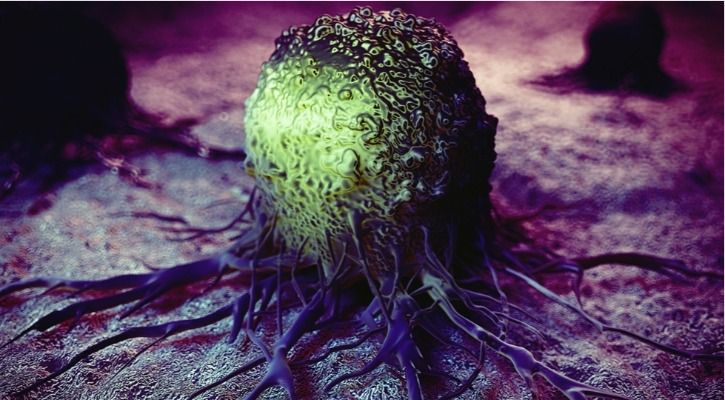
Professor Tasuku Honjo of Kyoto University in Japan and Professor James P Allison from the University of Texas in the US together uncovered a major breakthrough in cancer research. They found that it’s possible to treat cancer using the human body’s own immune system. Their work has since led to treatments for even advanced skin cancer, a normally deadly illness.
Swedish Academy behind the Nobel Prize said that immune checkpoint therapy, as it’s called, has revolutionised cancer treatment. Other medical experts also say it’s “strikingly effective”. As such, the two now share the Nobel prize of nine million Swedish kronor, approximately $1.01 million.
“I want to continue my research so that this immunotherapy will save more cancer patients than ever,” Professor Honjo said will accepting the prize. Professor Allison added, “It’s a great, emotional privilege to meet cancer patients who’ve been successfully treated with immune checkpoint blockade. They are living proof of the power of basic science, of following our urge to learn and to understand how things work.”
2018 Nobel Prize in Medicine
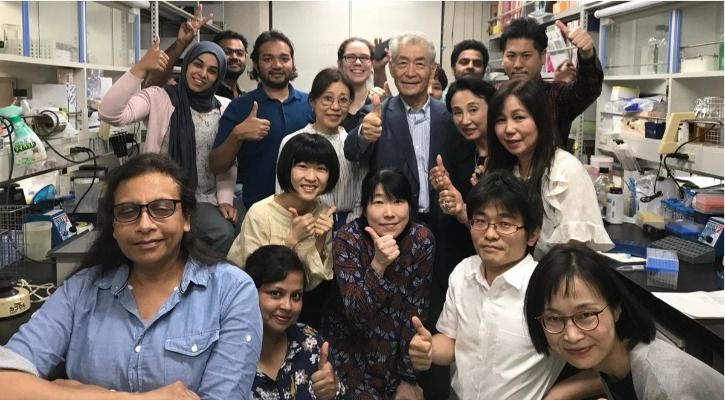
PROFESSOR TASUKU HONJO (CENTRE) AND HIS TEAM AT KYOTO UNIVERSITY
Our immune system functions by attacking foreign infections, but to do this it’s also ingrained with safeguards that make it avoid attacking our own tissue. Unfortunately, some types of cancers take advantage of this. Because of their similarities to human tissue, the immune system doesn’t target them.
Honjo and Allison then have figured out the protein responsible for triggering that safeguard. Thanks to that, they’ve been able to design treatments that inhibit that protein, unleashing the immune system on the cancer cells in the process. In short, advanced cancers that were once considered untreatable are not anymore. One of these is the most serious kind of skin cancers, melanoma.
2018 Nobel Prize in Medicine
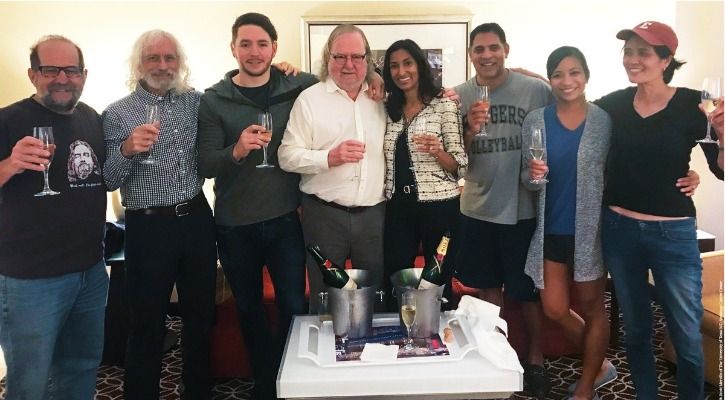
PROFESSOR JAMES P ALLISON (CENTRE) CELEBRATING WITH FAMILY AND FRIENDS
There are limits of course, the new treatment doesn’t work for every patient. On those it has worked however, it’s functioned incredibly well. In some, the treatment has helped the body rid itself of the tumour entirely, even after it had begun to spread to other systems. And that’s something never seen before. In fact, the treatment has also been shown to work on patients with lung cancer too.
Right now, the treatment gives cancer patients who had run out of options another chance at getting well. But beyond that, it holds massive possibility for further developments in the field of immunotherapy. Frankly, scientists aren’t sure what other medical progress this research will spark, and that’s exciting.