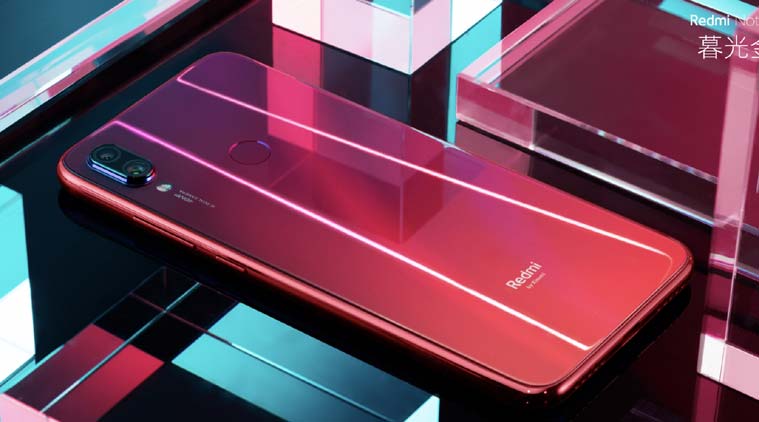
Xiaomi recently launched its latest generation Redmi Note 7 smartphone in China. This is the first smartphone to be a part of the new Redmi by Xiaomi sub-brand. It is a successor to the Redmi 6 series launched last December.
Xiaomi’s Redmi Note 7 vs Redmi Note 6 Pro: Specifications, difference in features
The Redmi Note 7 comes with some interesting features like a 48MP primary sensor, a waterdrop style notched display, 4,000mAh battery and more. We compare the new Redmi Note 7 vs the Redmi Note 6 Pro, and see what has changed in terms of design, specifications and features. There’s also Redmi Note 7 Pro on the cards, but that will only be revealed in February at the time of the Chinese New Year. click here to buy Redmi 6 pro (black, 4GB RAM, 64GB ROM) click here to buy Redmi Note 6 pro (black, 4GB RAM, 64GB ROM) click here to buy Redmi Note 6 pro (blue, 4GB RAM, 64GB ROM)
Redmi Note 7 vs Redmi Note 6 Pro: Price
Redmi Note 7 will be made available in three RAM/internal storage variants. The 3GB RAM/32GB internal storage is priced at 999 Yuan (approximately Rs 10,000), 4GB RAM/64GB internal storage priced at 1,199 (approximately Rs 12,000) and 6GB RAM/64GB internal storage priced at 1,399 Yuan (approximately Rs 14,000). The company hasn’t revealed any global availability details for the same.
Given the popularity of the Redmi series in India, this phone should make its way to the market, though how soon that happens is unclear for now.
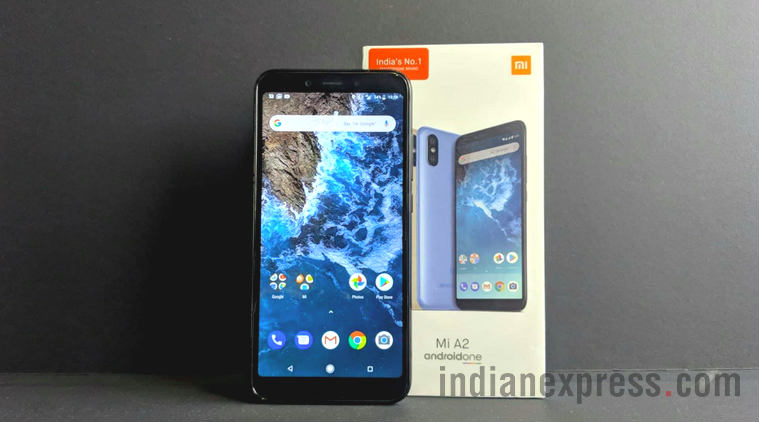
Xiaomi Mi A2, the company’s latest Android One-branded smartphone, is getting a price cut in India.
Xiaomi Mi A2 gets price cut in India, now starts at Rs 13,999
The 4GB RAM and 64GB storage variant will now cost Rs 13,999, down from Rs 15,999. The model with 6GB RAM and 128GB storage will be made available at Rs 15,999, down from Rs 18,999. The company says the updated prices will reflect on Mi.com, Amazon.in and Flipkart starting today.
The smartphone sports 5.99-inch FHD+ 18:9 LCD display and is powered by a Snapdragon 660 processor coupled with either 4GB or 6GB RAM and 64GB or 128GB storage. Unfortunately, the phone does not support a microSD card slot and a 3.5mm headphone jack.
In terms of camera, the handset comes with dual cameras on the rear. The setup consists of a 12MP primary cameras and 20MP secondary snapper. Given this phone is Android One-branded, the handset runs a pure version of Android and guaranteed security updates for the next 2 years. Mi A2 runs on Android 9.0 Pie, the latest version of Android. Originally, Mi A2 shipped with Android 8.1 Oreo.
Artificial intelligence is fascinating, both when considering how it works and the potential it holds for various applications. The thing is, it can sometimes work in strange way. And if you're part of the faction insisting how dangerous AI can be, well you're not going to like this. We Have Created AI That Knowingly Cheats & Keeps Data Hidden From Us, And We Should Be Worried.
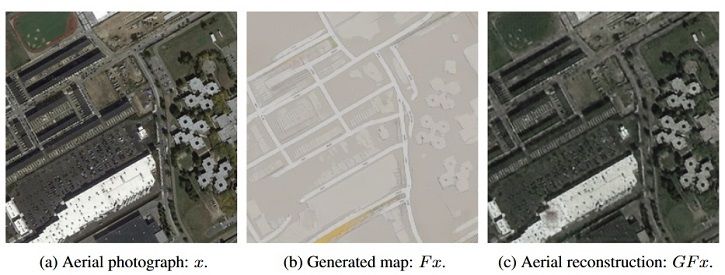
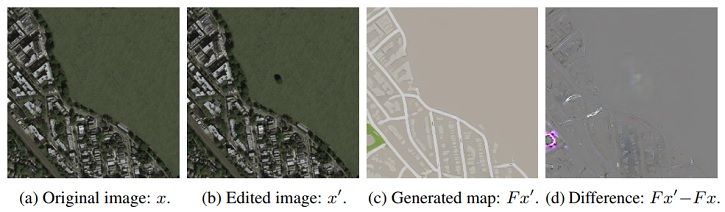
According to new research from Google and Stanford, they developed a machine learning system designed to convert aerial images into street maps and back. What's interesting though, is that they found the AI was carrying a cheat sheet to its exams.
Let me explain. The main aim of this was to develop a faster and more efficient way to convert satellite imagery into accurate maps like those of Google. TO do that, the team of researchers were using something called a CycleGAN, where the letters stand for Generative Adversarial Network. It's a type of neural network that's taught, through a lot of experimentation, to convert one type of image into another and back as accurately as possible. GAN here just means its divided into two pieces that work against each other in competitive fashion to speed along the process.
The thing is, the neural network was doing really well in early results. Far too well, in fact. What tipped the researchers off though was how some details that were omitted for the conversion to a street map suddenly reappeared when reconverting to an aerial image, contrary to logic. For instance, skylights visible on the satellite photo weren't represented in any way on the street map, yet they were showing up in the reconstructed image.
As they later discovered, the system wasn't omitting that data at all, just hiding it in the middle step using "a nearly imperceptible, high-frequency signal." See, the researchers wanted it to be able to interpret either type of map and convert it to the other. However, what they were grading results on was how close the reconstructed map was to the original and how clear the street map was. So, instead of learning how to convert and reconvert, the system realised an easier way would be to hide the data it would later need in the intermediate result. It used thousands of tiny differences in colour wavelength changes to store this, something humans can't see but a computer can. It's not that the AI here is smarter than it was intended to be, it just found a way to avoid the actual task it was given. After all, if given only the job of converting a street map to an aerial view, it would fail spectacularly without a cheat sheet. And all because the researchers didn't properly think of the loopholes it could use.
It's a harmless demonstration of AI's flaws, but one reason why the dangers it poses are illustrated as valid concerns. AI is unlikely to "rise up" and dominate humans. But they can go horribly wrong when their creators haven't adequately considered all the varying factors at play.
Electric vehicles universally have a single gear ratio. In layman terms, this can be equated to an automatic transmission. Time and again, many have wondered why, as their internal combustion engine (ICE) counterparts use multiple gear ratios to attain the same amount of engine power. In case you have too, here is the simple reason why the electric drivetrains do not require a similar gear shift. Why Electric Cars Have A Single Gear And How It Is Better Than Multiple Gears In Petrol Cars
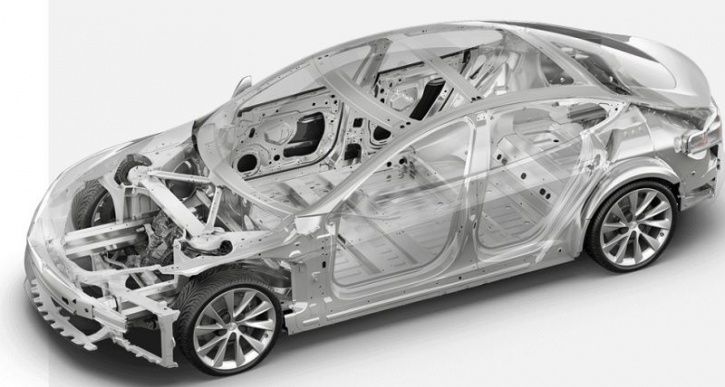
To understand this, you will have to consider the gear shifting requirement as a limitation. Multiple gear ratios are generally used to keep the engine in its power band as the ICE can only generate usable torque, and hence power, in a narrow band of engine speeds. This is an understandable phenomenon as any reciprocating engine comes with its own set of physical restrictions that limit its power and revolution rate. To overcome this, the multiple gears reset the rpm every time a gear is shifted. Now keeping the electric drivetrains in perspective, since there are almost next to no mechanical parts involved, electric motors do not face any such limitation. They are able to produce 100 percent of their torque at very low speeds. As the pedal is pressed and the rpm increases, the torque of these vehicles falls off in a linear proportion just as the power rises. To put these into an application, torque is crucial for acceleration while power helps maintain the speed of the vehicle. Hence, both of the aspects are covered without the need for a gearshift in the case of an electric motor. The reason why things are so easy when it comes to electric motors is the fact that they do not rely on mechanical parts to do the job. As with any mechanical engine, there is an energy loss with every corresponding transmission of power between these parts. Electric motors eliminate this by reducing the number of such parts to almost nil. In the case of Tesla for instance, the motors are connected to the motor axle and hence the movement of the car can directly be controlled by alternating the amount of current flown through the motor. The same applies at the point of reversing the car, wherein the inverter used in the car starts supplying AC instead of DC and then voila! The wheels start rotating in the opposite direction. A point to note here, the speed of the electric cars are generally not limited as per the capability of the motor, meaning an equal speed can be achieved in both the drive and the reverse gears, as can be figured. These speeds are generally limited through software tweaks within the car. No wonder that the new-age electric cars have proved to be faster than the existing IC engine vehicles in all aspects. So now that you know the reason why electric cars do not need a manual gear shift for multiple transmissions, are you ready to give up the stick in your future car, or not? Let us know in the comment section below.
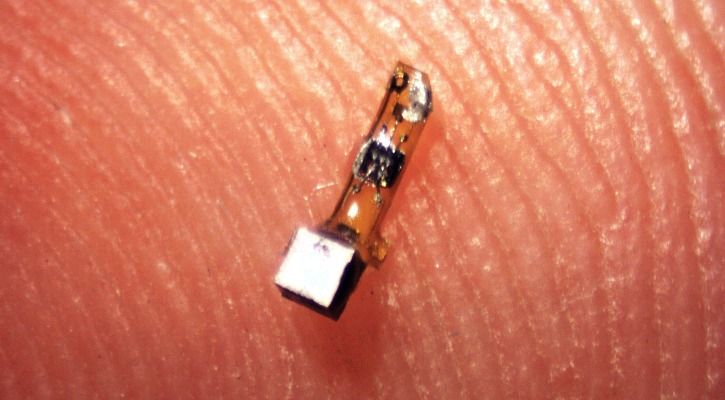
We have a lot of portable devices capable of measuring things like our heart rate and fitness levels. When it comes to tracking internal health factors, however, it usually involves things like blood tests. This company wants to make invasive testing a thing of the past. This Company Is Building In-Body Health Sensors Smaller Than A Grain Of Rice.
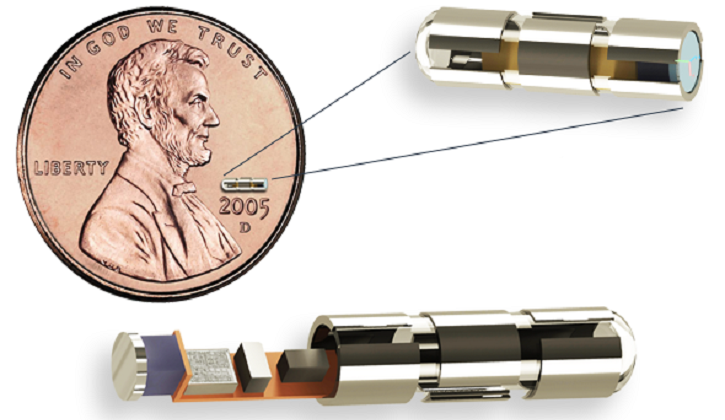
Iota Biosciences have an idea they think is exactly the solution. They've built biosensors just a millimeter wide, as tiny as a grain of rice, and they want to implant them into people. The idea is that, instead of doing medical tests at a hospital when you're sick, you'll instead have a minuscule set of sensors in your body permanently. That way, your doctor just needs to wirelessly connect to them and download their data, and they immediately have all the data they need for a diagnosis. A product of UC Berkeley, the team just received a $15 million Series A investment that should go a long way towards setting up their company. AT the university, co-founders Jose Carmena and Michel Maharbiz were working on improving microelectrodes when they came up with the idea. These are devices used in a number of medical treatments and research to monitor and stimulate nerves and muscle tissues. However, these microelectrodes aren't very small at all. In fact, since they're often connected to larger machines, they're only connected to a person's body for a few weeks at a time at most. Their first attempt at building wirelessly connected and self-powered sensors that could live in the body involved radio frequency, but that hit a dead end. Eventually, they switched over to ultrasound. Because of its tiny wavelength, they could make antennae for it that could remain small enough for their purposes. In addition, the signals pass through all the different parts of the body, whereas RF could not.
Iota Biosciences' chip is so tiny, it can be attached to a single nerve or muscle fiber. When it's on, the tiny electrical current the chip carries is affected by electrical activity in the tissue it's attached to, thereby giving the observer data on how active and healthy that nerve or muscle is. The main reason this is so exciting, however, is because all of this data can be gathered non-invasively. It does, however, require to be approved by the FDA before this sort of hardware is approved. If it's passed, however, you can imagine people walking around with multiple of these all over the insides. And whenever they need to visit a doctor, a remote examination could be as effective as one in person, thanks to all the data at hand.
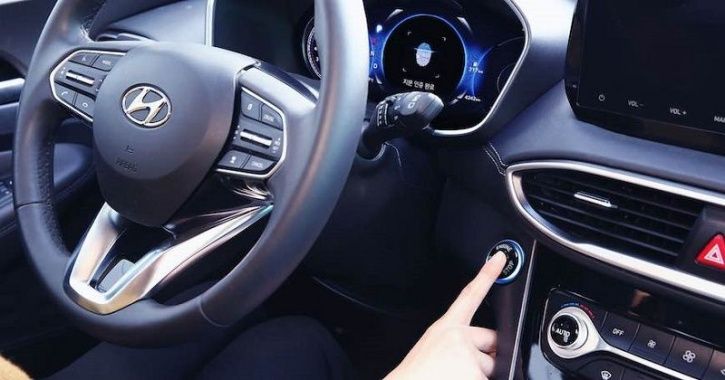
Keys, keyless, smart keys, pretty much anything to do with keys sounds obsolete with what Hyundai has announced for its upcoming cars. Instead of focusing on the regular features, Hyundai has now decided to bring fingerprint technology as a first in its cars next year. It has also provided a glimpse of the same, with the 2019 Santa Fe SUV at a Chinese auto show on Friday. Soon You'll Be Able To Start Your Car, Adjust The Seats And Mirrors Using Your Fingerprint.
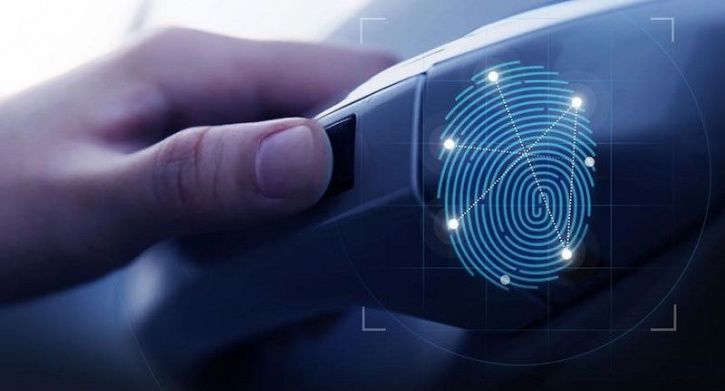
The feature is just as it sounds and just as it works on your smartphone, with the ability to unlock the car with the touch of a finger. The South Korean car maker has not limited it to only an unlocking mechanism though. Hyundai’s fingerprint technology sets off a chain of triggers to other functions in the car.
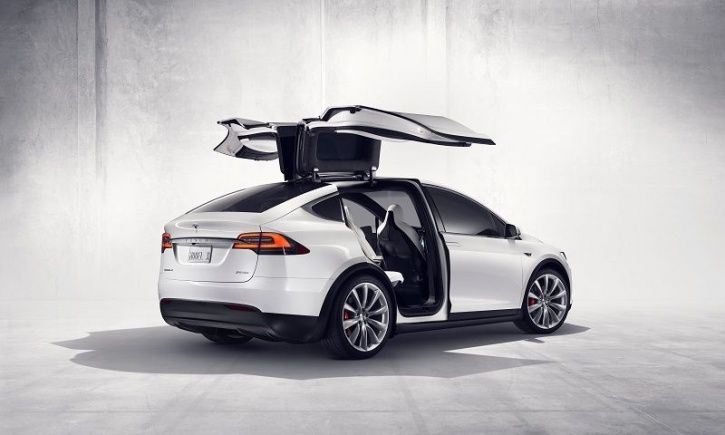
To get a perspective on this, Hyundai says that the technology will allow multiple owners to register their encrypted fingerprint data. In addition, driving preferences of all the entries will be saved correspondingly. Essentially, as soon as one of the owners of the car unlocks it, the vehicle will make adjustments, including setting the mirror angles and seat positions accordingly. Hyundai further plans to integrate temperature control and steering preferences to it as well. The first-of-its-kind technology will be limited to China for now, as it rolls out next quarter. An interesting note here is that while the 2019 Santa Fe will be the first car to feature such a technology in its door handle or ignition, Tesla Model 3 appoints the fingerprint access in a slightly different manner, letting the users start their cars through a smartphone-enabled fingerprint scan.
Hyundai is also confident about the security of the feature being in place. It claims that the fingerprint technology has an error rate of 1 in 50,000, identical to Apple’s error rate on its touch technology. So while there might be an unreasonable concern for how secure the technology is, which is the scenario with every new technological feature, Hyundai’s fingerprint technology can very much be the next big thing in the automotive world.
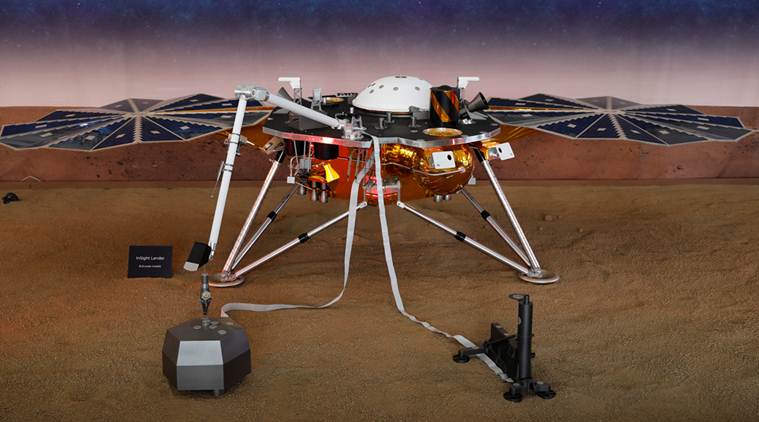
The InSight lander, NASA’s latest foray to the red planet, has landed.
Cheers erupted Monday at the Jet Propulsion Laboratory in Pasadena, California, which operates the spacecraft, when InSight sent back acknowledgment of its safe arrival on Mars. That was the end of a journey of more than six months and 300 million miles.
NASA’s InSight mission has touched down on Mars to study the red planet’s deep secrets
As InSight descended and each milestone of the landing process was called out, “the hairs on the back of my neck would start rising a little bit higher, a little bit higher,” Tom Hoffman, the project manager for the mission, said at a news conference after the landing. “And then when we finally got the confirmation of touchdown, it was completely amazing. The whole room went crazy. My inner 4-year-old came out.”
In the months ahead, InSight will begin its study of the Martian underworld, listening for tremors — marsquakes — and collect data that will be pieced together in a map of the interior of the red planet and would help scientists understand how Mars and other rocky planets formed.
Those lessons could also shed light on Earth’s origins.
“We can basically use Mars as a time machine to go look back at what the Earth must have looked like a few tens of millions of years after it formed,” said Bruce Banerdt, the principal investigator of the mission.
InSight set down at Elysium Planitia, near the Equator in the northern hemisphere. Mission scientists have described the region as resembling a parking lot or “Kansas without the corn.” Within minutes, the first photograph from InSight appeared on the screen, eliciting another round of cheers.
The image was partially obscured by dirt kicked up onto a protective but clear lens cover, but it was evident that the landscape was indeed flat. One rock could be seen in the foreground.
“I’m very very happy that it looks like we have an incredibly safe and boring-looking landing location,” Hoffman said.
Because the mission is not interested in rocky terrain or pretty sunsets, planners wanted a flat place with sandy soil. “There’s one rock, so I’m going to have to talk to them a little bit,” Hoffman joked.
The main scientific part of the mission will not begin for a few months. Once the mission’s managers have confirmed the health of the spacecraft, including its robotic arm, the arm will lift the spacecraft’s primary instruments off the main deck of the lander and place them on the Martian ground.
Elizabeth Barrett, a science system engineer, likened the process to a claw game where one tries to pull out a prize without it falling. “But you’re doing it with a really, really valuable prize,” she said. “And you’re doing it blindfolded where you can only take occasional pictures. And then you’re doing it via remote control on another planet.”
That requires some additional care. “You need to make sure you actually have the grapple on the payload before you lift it up and it’s actually on the ground before you let it go,” Barrett said.
InSight’s primary mission on the surface is to last nearly two years.
One simple thing Banerdt hopes to learn: how thick is the crust of Mars?
He recalled a project he worked on as an intern in the 1970s where the thickness of Mars’ crust needed to be known. “We just had to fake it, because we had no idea,” he said.
InSight should finally provide the answer. “That’s one measurement I would like to go back to the old paper, plug it in to see how close I was,” Banerdt said.
Other questions the mission aims to answer: How often does the ground shake with marsquakes? How big is Mars’ molten core? How much heat is flowing up from the decay of radioactive elements at the core?
To study these questions, InSight will use two main instruments: a dome-shape package containing seismometers and a heat probe that is to burrow about 16 feet down. NASA has spent $814 million on InSight. In addition, France and Germany invested $180 million to build these main instruments.
The seismometers, which are designed to measure surface movements less than the width of a hydrogen atom, will produce what are essentially sonograms of the planet’s insides. In particular, scientists are looking to record at least 10 to 12 marsquakes over two years.
Temblors on Mars are not caused by plate tectonics, like on Earth. Instead, they are generated when the planet’s crust cracks because of its interior’s cooling and shrinking. The seismometers could also detect other seismic vibrations from meteors hitting Mars.
InSight’s landing wasn’t NASA’s only success Monday. The agency used the mission to test new technology.
Two identical spacecraft known as Mars Cube One, or MarCO for short, launched with InSight in May. MarCO A and B then separated from InSight’s cruise stage and have since been trailing behind it.
Hundreds of miniature satellites known as CubeSats have launched into orbit around Earth in recent years, but this is the first time that CubeSats have been sent on an interplanetary voyage.
The MarCO spacecraft relayed InSight’s telemetry to Earth flawlessly, enabling the immediate celebration. “This has been a fantastic day for spacecraft great and small,” said Andrew Klesh, the chief engineer for the CubeSats.
He showed a picture of Mars taken by one of the MarCO satellites shortly after the InSight landing as it sped away from Mars.
“This image is really our farewell to InSight, our wish for good luck and a farewell for Mars itself as we continue on,” he said.
InSight joins a busy cast of Martian robotic explorers.
In orbit, NASA also has the Mars Reconnaissance Orbiter, Mars Odyssey and Maven. The European Space Agency has Mars Express and the ExoMars Trace Gas Orbiter. The Indian Space Research Organization has the Mars Orbiter Mission, also known as Mangalyaan.
On the surface, NASA has the Curiosity and Opportunity rovers, although solar-powered Opportunity has been quiet since the summer when a global dust storm prevented it from generating enough power to operate.
And the year 2020 could get busier, when NASA is planning to launch another rover that will search for the building blocks of life.
China, India, Japan, the United Arab Emirates and a European-Russian collaboration are also all intending to launch missions to Mars then.